About Australia

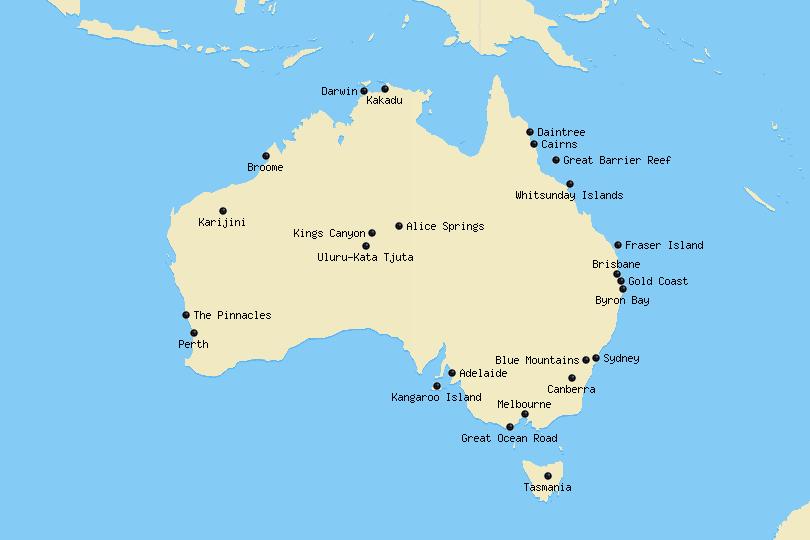
Queensland
Brisbane: A popular tourist destination, Brisbane is a lively, dynamic place that is bathed in beautiful sunshine year-round. It has a population of about 2 million people, making it the third-largest city in Australia, after Sydney and Melbourne. Located in the Sunshine State, many visitors stop by on their way to the fantastic resorts and beaches that lie to its north and south.
Gold Coast: Blessed with year-round warm weather and sunny skies, Australia’s glimmering Gold Coast lies just to the south of Brisbane on Queensland’s southeastern coastline. The coastal city is one of the most popular holiday destinations in the country thanks to its lively yet laid-back vibe and alluring sun, sea, and surf. Surfers Paradise is the area most people flock to.
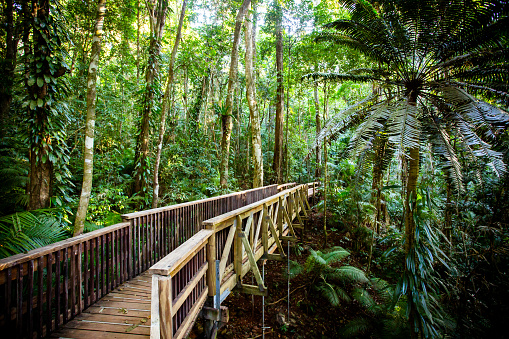
The famous Jindalba Boardwalk thru ancient rainforest in the Daintree region of Queensland, Australia
Daintree Rainforest: Lying on the northeast coast of Australia in a national park of the same name, Daintree is one of the world’s oldest and most diverse tropical rainforests. Located in the state of Queensland, its fantastic fauna and flora and ancient ecosystems are incredible to explore, and home to lots of wildlife. Daintree doesn’t consist solely of lush and verdant rainforest, but also includes rugged mountains, teeming rivers, rich coral reef systems, and beautiful beaches. Of these, Cape Tribulation is considered to boast some of the best white sandy beaches in Australia. Famous for crocodiles.
Cairns: For its tropical climate, easy-going ambiance and close proximity to the Great Barrier Reef, Cairns is one of Australia’s most popular vacation destinations. Located on the northwest corner of Australia, Cairns is a provincial but stylish city with a population of around 150,000 people.
Great Barrier Reef: The largest coral reef system on the face of the earth, the Great Barrier Reef is simply colossal. Located in the Coral Sea off the coast of Australia’s state of Queensland, the Great Barrier Reef encompasses a huge area of more than 2,900 coral reefs and hundreds of islands and cays. Formed by millions of living organisms over a period of millions of years, the Reef is now one of the world’s most diverse and complex ecosystems.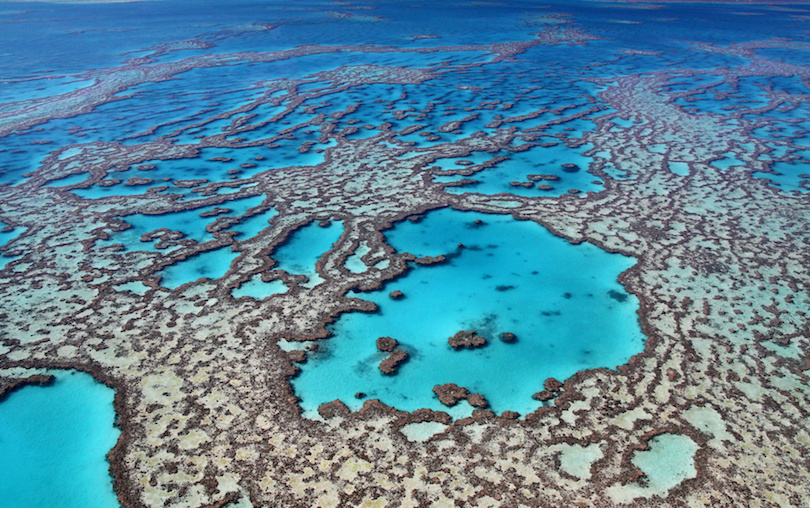
Fraser Island: Separated from the mainland of Australia by the Great Sandy Strait, Fraser Island lies just off the Queensland’s southeast coast. Stretching for over a hundred kilometers, the world’s largest sand island is a popular place to visit due to its beautiful scenery and outstanding natural sights.
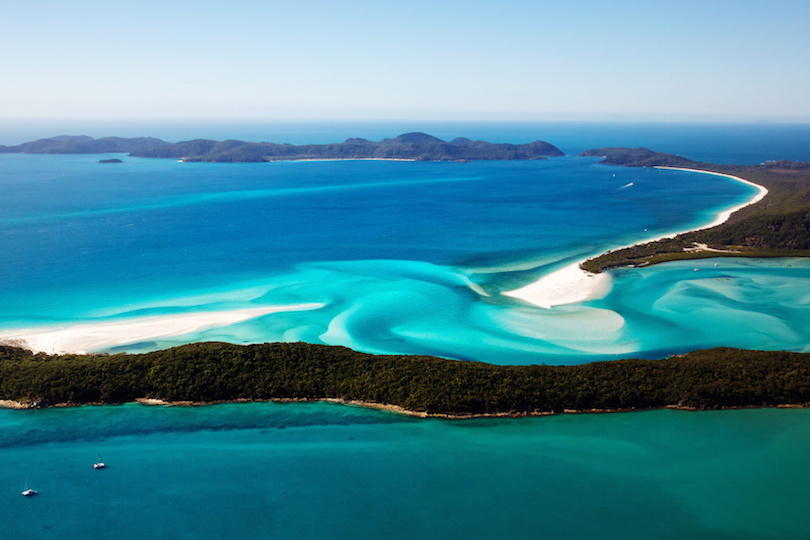 Whitsunday Islands: One of Australia’s most popular tourist destinations, the Whitsunday Islands lie scattered off Queensland’s northeastern coast, surrounded by warm and inviting aquamarine waters. As it is part of the Great Barrier Reef, most of the archipelago lies within national parks, so stunning scenery and picture-perfect beaches abound.
Western Australia
The Pinnacles: Located within Nambung National Park, The Pinnacles can be found not far from the small town of Cervantes in Western Australia. Due to their remote setting, the spectacular limestone formations largely remained unknown until 1967, when a reserve was formed to protect the prominent pillars.
Karijini National Park: The second-largest national park in Western Australia, Karijini lies about a thousand kilometers to the north of the state’s capital, Perth. Centered around the Hamersley Ranges, it is very mountainous and known for the gorgeous gorges, slot canyons, and waterfalls that dot its confines.
Broome: Perched on a small peninsula that juts into the Indian Ocean, the small, scenic and secluded town of Broome is located on the northern coast of Western Australia. Lying more than 2,000 kilometers from both Darwin and Perth, the two nearest cities, the remote beach resort and pearling town acts as a gateway to the region’s riches. More active holidaymakers can visit the fantastic rock formations at Entrance Point and the red cliffs and dinosaur footprints at Gantheaume Point; both of which lie nearby. Further afield are the breathtaking Horizontal Falls, with other wonderfully wild and untouched landscapes dotted about the Dampier Peninsula and the Kimberley Region.
Perth: The capital of Western Australia, Perth is very isolated from the rest of the country, yet is routinely considered one of the most livable cities in the world thanks to its laidback vibe, fantastic cultural sites, and a wide range of things to do. Ferry service in Perth takes visitors to car-free Rottnest Island or the closer Penguin Island to watch daily feedings of the flightless birds.
Northern Territory
Alice Springs – Uluru: Located almost slap bang in the center of Australia, Alice Springs lies in the Northern Territory’s endless outback, more than 1,500 kilometers from the nearest city. While it certainly takes some getting to, the remote rural town is perfectly placed for exploring the Red Centre. Its main draw, however, are the awe-inspiring desert landscapes, rock formations, gorges and the sacred rock, Uluru, that lie all around it.
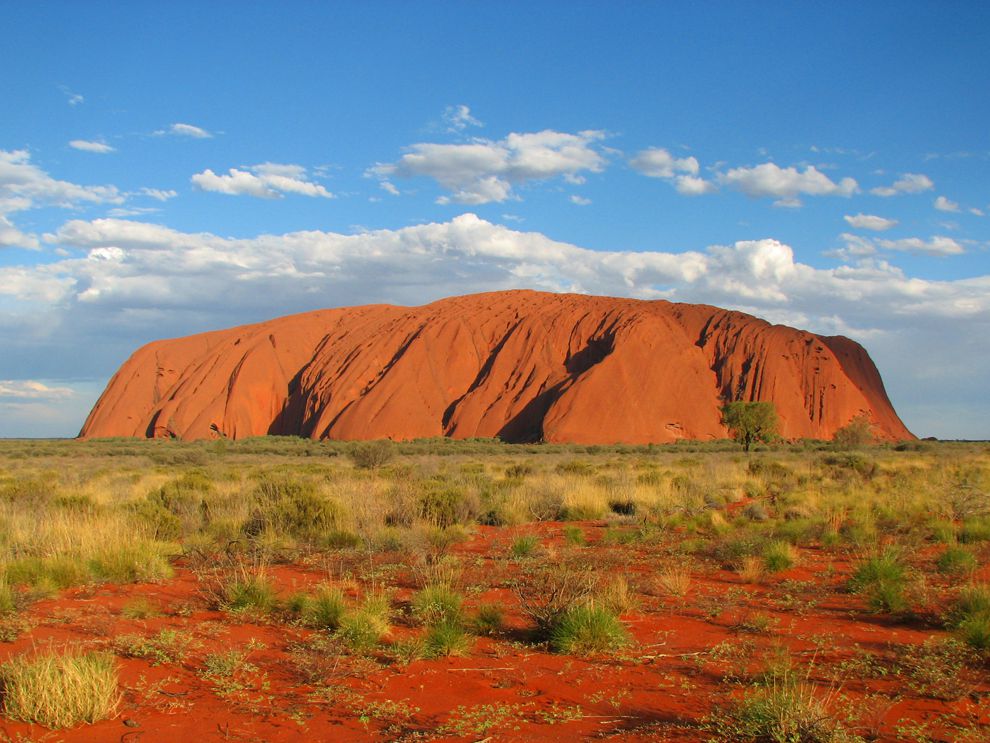 Uluru-Kata Tjuta National Park: World fa
mous, spectacular Uluru is instantly recognizable due to its ruddy red hue; it is one of Australia’s most prominent landmarks. The immense rock is incredible to visit and the main reason the national park is such a popular destination. Its grandeur and uniqueness live long in the memory of those who gaze upon it. While Uluru is the main draw, the equally mesmerizing rock formations of Kata Tijuta are fantastic to wander around, and there are lots of activities for visitors to enjoy.
Darwin: Darwin is also the hub for tours to famous Kakadu National Park as well as Litchfield National Park and Katherine Gorge. Whether watching crocodiles cavort in Crocodylus Park, cruising to the Aboriginal-owned Tiwi Islands or relaxing on the beach, there’s always something new to experience in tropical Darwin.
Kakadu National Park: Occupied by Aboriginal people for over 40,000 years, Kakadu National Park has over five thousand ancient rock art sites which are fascinating to visit. It is a place of immense cultural and natural significance. The park is huge and contains some stunning natural sights which make it well worth a visit; the Kakadu Escarpment is particularly breathtaking.
Kings Canyon: Lying in Watarrka National Park in Australia’s Northern Territory, Kings Canyon is sure to impress with its staggering size, scale, and stunning scenery. One of the region’s main attractions, the gaping gorge was formed more than 400 million years ago as the ruddy-colored sandstone eroded.
New South Wales

To see all New South Wales has to offer, visit Destination NSW website at https://www.visitnsw.com/destinations/country-nsw
Blue Mountains: The Blue Mountains is a rugged region west of Sydney in Australia’s New South Wales. Known for dramatic scenery, it encompasses steep cliffs, eucalyptus forests, waterfalls and villages dotted with guesthouses, galleries and gardens. Katoomba, a major town in the area, borders Blue Mountains National Park and its bushwalking trails. Echo Point affords views of the storied Three Sisters sandstone rock formation.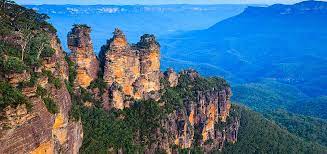
Kosciuszko National Park: Kosciuszko National Park spoils you with snow sports, walks and mountain biking in the Snowy Mountains. Go camping, explore caves, climb Australia’s highest mountain, or stay in heritage accommodation. From Jindabyne to Tumut, NSW’s largest national park will keep you busy for a weekend or for weeks. Ski or snowboard the highest runs in the country at Thredbo and Perisher. Try cross-country skiing. Hike to the summit of Mount Kosciuszko, or descend underground to magical Yarrangobilly Caves. Adventure seekers can get their thrills on the many walks and mountain bike trails. Why not challenge yourself on Main Range walk or ride popular Thredbo Valley track. Saddle up for a horse ride in the High Plains or near Khancoban. There are also historic huts, dazzling wildflowers, and awe-inspiring lookout views to discover. Need inspiration? Ask at the park’s visitor centres about tours. There’s great fishing and paddling in the lower Snowy and upper Murray rivers. Throw a line in a mountain stream or reservoir like Blowering, Eucumbene and Tantangara. The scenic Alpine Way and Snowy Mountains Highway drives are the perfect way to get around and see it all.
Lord Howe Island snorkling: Surrounded by a pristine marine park, with more than 450 fish species and 90 coral species, Lord Howe Island is an underwater paradise. You can snorkel and dive in the warm waters of the UNESCO World Heritage marine park, or enjoy it from above the surface; kayaking and stand-up paddleboarding. The lagoon is protected by the world’s most southerly coral reef – a fantastic spot for snorkellers and beginner divers. You might spot green and hawksbill turtles, blue knifefish, three-banded coralfish and doubleheader wrasse amongst a multitude of other brightly coloured fish.
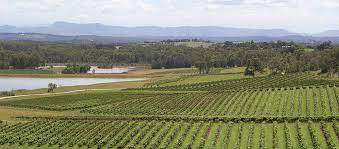 Hunter Valley Grape Growing Region: Hunter Valley is a winegrape growing zone that includes the region of Hunter and the sub-regions of Upper Hunter Valley, Broke Fordwich, and Pokolbin. It is north-west of the New South Wales city of Newcastle and has a warm and humid climate. The area is 19,578 km2 in size and has a total of 2,605 hectares of vineyards. The main varieties grown in the region are Shiraz, Semillon, Chardonnay, and Verdelho.
Norfolk Island World Heritage Site: The Kingston and Arthur’s Vale Historic Area (KAVHA) is a World Heritage site located on Norfolk Island. One of Australia’s most interesting and important heritage sites, KAVHA is a living showcase of Polynesian, convict and Pitcairn Islander history. The site is a traditional focal point for the Norfolk Island community. As a living heritage site, KAVHA continues to contribute to the life, identity and culture of the Norfolk Island community.
Port Stephens – top fishing destinations
Coffs Harbour: At the heart of the spectacular Coffs Coast, Coffs Harbour is a wonderful destination for family holidays and memorable adventures. From bushwalking and whale watching to the iconic Big Banana, stunning beaches, a marine sanctuary and more, this beachside city is full of attractions.
Byron Bay: With its stunning natural attractions and eclectic community, Byron Bay on the North Coast of NSW is one of the world’s most famous coastal towns. You’ll be captivated by gorgeous beaches, breathtaking hinterland rainforest, spectacular coastal trails, amazing marine life and a buzzing food scene.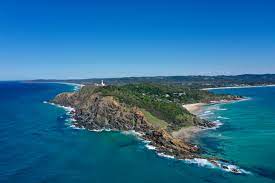
Outback NSW: The New South Wales Outback is a triangular region in the west, covering around one third of the state. The region commences along the western half of the state border with Queensland, encompassing the remote outback towns of Bourke and Walgett.
Sydney: Almost picture perfect, Sydney is a fantastic city with a lot going for it. A modern city with a long history, Sydney is defined by its scenic harbor. The region’s first inhabitants lived along the harbor’s bank for thousands of years. The harbor was also the landing site for convicts sent to Australia during the 1780s. Today, ferries take visitors for cruises under the famed Sydney Harbor Bridge and past the iconic Sydney Opera House.
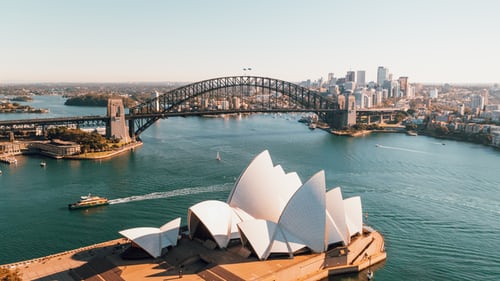 Sydney Harbour Opera House: The Sydney Opera House is a multi-venue performing arts centre in Sydney. Located on the banks of the Sydney Harbour, it is often regarded as one of the world’s most famous and distinctive buildings and a masterpiece of 20th century architecture.
Harbour Bridge: The Sydney Harbour Bridge is a heritage-listed steel through arch bridge in Sydney, spanning Sydney Harbour from the central business district to the North Shore. The view of the bridge, the harbour, and the nearby Sydney Opera House is widely regarded as an iconic image of Sydney, and of Australia itself.
South Australia
Adelaide: The city is located on a plain between the rolling Adelaide Hills and the Gulf and is bordered by many of Australia’s famous wine regions. The Barossa Valley and Clare Valley regions lie to the north, the McLaren Vale and Langhorne Creek regions to the south and the cooler Adelaide Hills region to the east.
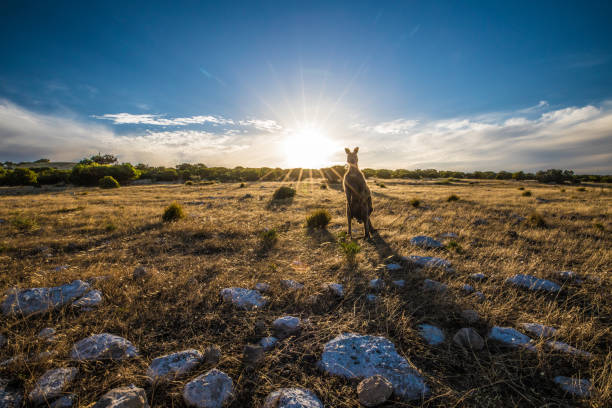
Kangaroo Island: The third-largest island in the country, Kangaroo Island lies just off the coast of South Australia, around a 45-minute ferry ride from Cape Jarvis. One of the most popular tourist destinations in the state, its delightfully untouched landscapes are home to incredible scenery and an abundance of wildlife. Everything from huge dunes and towering cliffs to large caves and remarkable rock formations can be found in its numerous nature reserves. These are home to echidnas, koalas, and kangaroos, while penguins, sea lions and dolphins can be spotted offshore. Its diverse landscapes lend themselves perfectly to all kinds of outdoor activities, with hiking, sandboarding and scuba diving popular.
Victoria
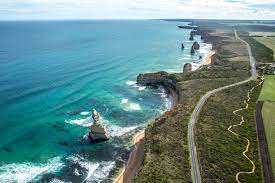 Great Ocean Road: Winding along the south coast of the state of Victoria, the 243 kilometer-long Great Ocean Road is one of the world’s most scenic drives. Completed in 1932, the highway was built by soldiers returning from WWI and is dedicated to those who lost their lives.
Melbourne: The capital of the state of Victoria, Melbourne is Australia’s second most populated city. Located near the southeastern tip of Australia on the large natural bay of Port Phillip, Melbourne is considered the nation’s cultural capital as well as an important port. Due to its high quality of life, citizens from around the world have flocked to the streets. Its multicultural population is reflected in the delicious cuisine and the unique neighborhoods that make it such a fascinating place to explore.
Tasmania
The island state of Tasmania may be isolated from the rest of the country but it still remains one of the best places to visit in Australia; almost half of its area is protected as the government looks to preserve the natural riches. With desolate wilderness and alpine plateaus interspersed with stunning white beaches, waterfalls, and forests, exploring its terrain is simply mesmerizing. Taking a boat trip along its craggy coast is equally rewarding and you can even see dolphins, penguins, and seals along the way.