About Flagstaff

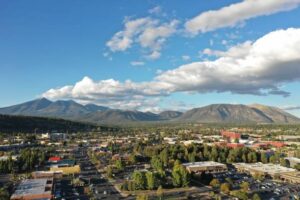
Flagstaff is a city in the U.S. state of Arizona, surrounded by mountains, desert and ponderosa pine forests. It’s a gateway to the San Francisco Peaks, home to Arizona’s tallest mountain (Humphreys Peak) and the Arizona Snowbowl ski resort. Elevation is about 7000 feet (2134 m).
History & Trivia:
- Sinagua, Anasazi and Cohonina Indians were the first to settle in the area of Flagstaff.
- Flagstaff derived its name from a flag-raising ceremony held on the Fourth of July in 1876. Boston travelers chose a tall pine, trimmed its branches from the bottom up and attached a flag to the top in of observance of the nation’s centennial.
- Flagstaff’s early development was associated with the railroad, lumber and livestock industries.
- Northern Arizona University, which calls Flagstaff home, was founded as the Northern Arizona Normal School at Flagstaff in 1899.
- Pluto was discovered at Lowell Observatory in Flagstaff, AZ.
- The famous Route 66 runs directly through Flagstaff, and Flagstaff was the city with the highest elevation on the historic Route.
- The Hotel Monte Vista, Weatherford Hotel and Museum Club, among other places in Flagstaff, are believed to be haunted. Guests have reported seeing “spirits” or having supernatural experiences.
- The Museum of Northern Arizona houses more than 5 million southwestern artifacts.
- Sunset Crater Volcano is just one of over 600 volcanoes located in Northern Arizona.
- Flagstaff is home to the Flagstaff Urban Trail System (FUTS) which encompasses approximately 50 miles of trails throughout the city and includes areas on all sides of town.
- Flagstaff is located in the world’s largest contiguous ponderosa pine forest.
- On average, 100 trains pass through Flagstaff in a day
Tour Information from Hotel
Things to do in Flagstaff
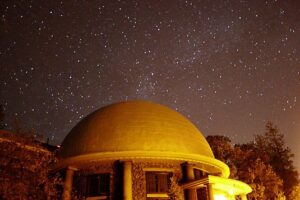 Lowell Observatory 1400 W. Mars Hill Road, Flagstaff (928) 774-3358 – Lowell Observatory, the home of Pluto, is an astronomical observatory in Flagstaff, Arizona, United States. Lowell Observatory was established in 1894, placing it among the oldest observatories in the United States, and was designated a National Historic Landmark in 1965. Through the years, the Observatory has been home to many discoveries, including the first detection of the expanding nature of the universe, the discovery of Pluto, moon mapping for the Apollo program to the moon, the rings of Uranus, atmosphere of Pluto, and scores of others.
Hours:
ADMISSION
Covers day and evening programs;
reservations not needed.
Adults: M-Sat: $22 | Sun: $16
Seniors, AAA, Military, College:
M-Sat: $20 | Sun: $14
Ages 5–17: M-Sat: $14 | Sun: $10
Children 4 & Under: Free
Members: Free
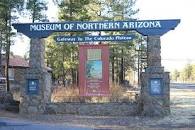
Museum of Northern Arizona – The Museum of Northern Arizona is a museum in Flagstaff, Arizona, United States, that was established as a repository for Indigenous material and natural history specimens from the Colorado Plateau.
 Open Four Days a Week
Thursday-Sunday: 10 am-4 pm
Closed Monday-Wednesday
$12 General admission
Free for Children 9 and under
Located two miles from downtown Flagstaff along scenic Highway 180 to Grand Canyon National Park, 3101 N. Fort Valley Road, Flagstaff, AZ 86001,
Phone: 928.774.5213
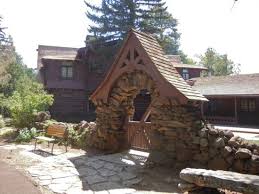
Riordan Mansion State Historic Park – 409 W Riordan Rd, Flagstaff, (928) 779-4395. This park is essentially a historic house museum. The Visitor Center, formerly the family automotive garage, has introductory interpretive exhibits on the history of the Riordan Family, including a video. Personally guided 60-minute interpretive tours of the house, featuring information on Riordan family history, and Arts and Crafts style architecture and furnishings are given, on the top of the hour. The West House has exhibits on Arts & Crafts, Native American pottery & baskets, photographic window panels, Lumber & Logging, and a model of historic Flagstaff.
 Summer Hours (May 1 – Oct 31)
9:30 a.m. – 5:00 p.m. daily
Tours begin on the hour 10:00 a.m. – 4:00 p.m
Adult (14+): $12.00
Youth (7–13): $6.00
Child (0–6): FREE
Tour fee not included with Arizona State Parks and Trails Day-Use Pass
Northern Arizona University Art Museum – Room 203 Building 10, Old Main, 620 Knoles Dr, Flagstaff, (928) 523-3471. This Northern Arizona University museum showcases modern paintings, sculptures & other fine art. Open 12 p.m.–5 p.m. Tuesday–Saturday. Closed Sunday, Monday, and all University holidays.
Sawmill Multicultural Art and Nature County Park – 703 E Sawmill Rd, Flagstaff, (928) 679-8000. Public park featuring demonstration backyard habitat gardens, community murals & sculptures. Sawmill Multicultural Art & Nature County Park was built on a “brownfield” where one of Flagstaff’s first sawmills operated from 1908 to 1993. The logging and lumber industry shaped the structure of Flagstaff. Hours: 6 AM – 10 PM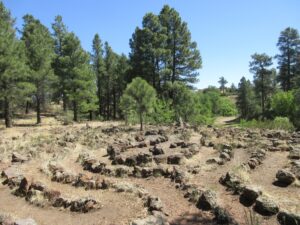
Heritage Square – 22 Aspen Avenue, Flagstaff. Heritage Square is a gathering place located in the heart of historic downtown. It is surrounded by retail shops  and restaurants with outdoor patios, making it a must-visit destination. Heritage Square is often filled with music, movies, children’s activities, live performances, art festivals and other special events throughout the year.
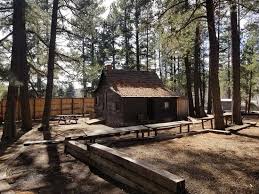
Pioneer Museum – 2340 N Fort Valley Rd, Flagstaff, (928) 774-6272. The Pioneer Museum is an old hospital converted into a Museum of Flagstaff’s rich history. The building was first created in 1908 with rock from Mount Elden. The museum features permanent and temporary exhibits exploring the historical development of the community and region. Hours: 10:00 to 5:00 pm
 AHS Members: Free
General Admission: $8.00
Seniors (65+): $7.00
Students (14+) with ID: $7.00
Youth (7-13): $4.00
Children 6 and younger: Free
Ask about free admission for veterans.
Campbell Mesa Loop Trails – Forest Service Rd 790, Flagstaff, Open 24 hours. Part of Coconino National Forest, the system includes five loops. The longest, 5.7-mile Campbell Mesa Loop swings around the northern and eastern perimeter of the mesa, while Anasazi Loop shortcuts the west end of Campbell Mesa Loop to make a 2.7-mile sub-loop. Continental Loop makes a short 1.8-mile tour to the northwest side of the mesa overlooking Walnut Canyon Lakes, Continental ball fields, and the course of the Rio de Flag. Sinagua Loop takes the shortest jaunt, just over a mile from the trailhead and back. Walnut Meadows Loop swings 4 miles around the southwest end of the mesa, affording panoramas of Anderson Mesa on the far side of Walnut Canyon and distant Mormon Mountain. From Walnut Meadows Loop, a half-mile connector crosses Old Walnut Canyon Road to the Arizona Trail and Fisher Point. All five loops of Campbell Mesa trail interconnect with each other and the Campbell Mesa trailhead.
Picture Canyon Natural and Cultural Preserve – 3920 N El Paso Flagstaff Rd. 5:00 to 5:00 pm. In addition to significant Northern Sinagua petroglyphs and other cultural resources, there are also carvings in walls that are used to identify the entry into fall and spring equinoxes.
There are three trails within the preserve:
- Tom Moody Trail is a 2.8-mile outer loop within the preserve. An outdoor classroom with educational panels is located near the start of the trail. The southeast section of the trail initially runs parallel with the Rio De Flag and along the canyon walls where a visitor can view the waterfall within the preserve. Continuing northeast, after crossing the Rio De Flag Bridge, will bring a visitor to a waterbird petroglyph site.
- Don Weaver Trail is a 0.7-mile section connecting with the Tom Moody Trail to create a smaller loop and brings a visitor to the opposite side of the canyon walls for another view of the waterfall.
- Arizona Trail is a 1.5-mile section of the larger 800+ mile trail that spans from Mexico to Utah, and bisects the Tom Moody Trail.
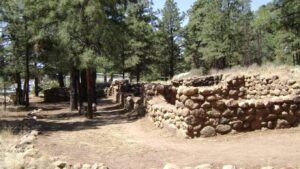 Elden Pueblo Archaeological Site – 1 mile north of Flagstaff mall on US-89, Flagstaff , (928) 526-0866, open 24 hours/day. Elden Pueblo is the site of an ancient Sinagua (Sin ah’ wa) village, inhabited from about A.D. 1070 to 1275. Archaeologists interpret it as a trade center because of the special items found there, including macaw remains that show connections to Mexico and shells and shell artifacts that show connections to the California coast. Visitors can see parts of the site via a short, easy trail through the pines. A 250 yd (0.2 m) long accessible dirt path leads from the parking lot to and around the ruins.
Things to do near Flagstaff
South of Flagstaff
Coconino National Forest – The Coconino National Forest is one of the most diverse National Forests in the country with landscapes ranging from the famous red rocks of Sedona to Ponderosa pine forests, from southwestern desert to alpine tundra. Explore mountains and canyons, fish in small lakes, and wade in lazy creeks and streams. Acreage: 1,842,959
East of Flagstaff
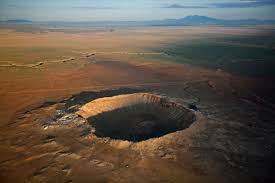 Meteor Crater National Landmark – (43 miles, 45 minutes east of Flagstaff) Meteor Crater is a meteorite impact crater approximately 18 miles west of Winslow in the northern Arizona desert of the United States (Private ownership). Open 7:00 am to 7:00 pm. eance fees are all inclusive, and entitles the visitor full access to the introductory video, the exhibits, guided tour along the rim of the crater, interactive displays and the aforementioned viewing stations, both inside and out.
Adults: $22.00
Seniors: (age 60 & older) $20.00
Juniors: (age 6 to 12) $13.00
Non-Active Duty U.S. Military/Veterans (with I.D.): $13.00
Active Duty Military (with I.D.): FREE
Petrified Forest National Park – (109 miles, 1-1/2 hours east from Flagstaff). Petrified Forest National Park is in northeastern Arizona and is one of the most amazing and unique parks. In its south, the Rainbow Forest is full of colorful petrified wood. It’s home to the Rainbow Forest Museum, with its paleontology exhibits and many trail access points. In the park’s center are the petroglyphs of Newspaper Rock and the ruined village of Puerco Pueblo. To the north, the Painted Desert Inn, a 1930s adobe building, is a museum with Hopi murals. Open 8:00 to 5:00 pm.
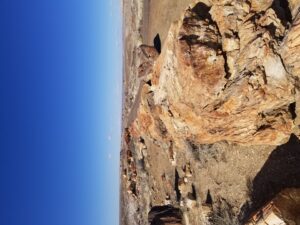 Do not remove any natural or cultural object from the park, including fossils, rocks, animals, plants, and artifacts. Do not relocate objects within the park. This changes the context of the objects. Context, where and how fossils and artifacts are found and described, is as important as the objects themselves. It is a minimum fine of $325 for removal or damage to petrified wood or other natural or cultural artifacts and features. Petrified rocks collected on private lands can be purchased at the gift stores or outside the park.
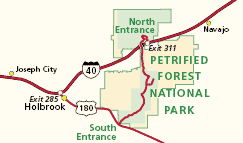 Petrified Forest National Park stretches north and south between Interstate 40 and Highway 180. There are two entrances into the park. Your direction of travel dictates which entrance is more convenient. Westbound Interstate 40 travelers should take Exit 311, drive the 28 miles through the park and connect with Highway 180 at the south end. Travel 19 miles on Highway 180 North to return to Interstate 40 via Holbrook. Eastbound Interstate 40 travelers should take Exit 285 into Holbrook then travel 19 miles on Highway 180 South to the park’s south entrance. Drive the 28 miles north through the park to return to Interstate 40. Usually you can drive through the park to connect I-40 with Hwy 180. Both North and South Entrances have a Visitor Center.
Painted Desert Inn National Historic Landmark, located at Kachina Point 2 miles from the north entrance at exit #311 off of I-40, once served as a respite for travelers along historic Route 66. From the inn, you may view distant vistas and exhibits while touring this historic building. Open 9:00 to 4:00 pm.
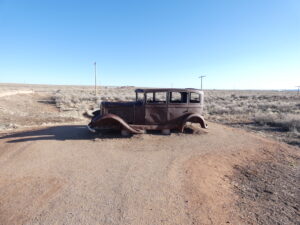 Historic Route 66 – Traces of an old roadbed and weathered telephone poles mark the path of the famous “Main Street of America.” Petrified Forest National Park is the only park in the National Park System containing a section of Historic Route 66. From Chicago to Los Angeles, this heavily traveled highway was not only a road–it stood as a symbol of opportunity, adventure and exploration to travelers.
Newspaper Rock – The archeological site known as Newspaper Rock is neither a newspaper nor a single rock. The site boasts over 650 petroglyphs covering a group of rockfaces within a small area.
Puerco Pueblo – 100+ room pueblo site located near the Puerco River, a major drainage that bisects the park.
Jasper Forest & Crystal Forest – Many petrified logs glimmer with quartz crystals
Hiking Trails –
- Painted Desert Rim Trail, Length: 1 mile (1.6 km) round trip, Trailheads: Tawa Point and Kachina Point
- Puerco Pueblo, Length: 0.3 mile (0.5 km) loop, Trailhead: Puerco Pueblo parking area
- Blue Mesa, Length: 1 mile (1.6 km) loop, Trailhead: Blue Mesa sun shelter
- Crystal Forest, Length: 0.75 mile (1.2 km) loop, Trailhead: Crystal Forest parking area
- Giant Logs, Length: 0.4 mile (0.6 km) loop, Location: Behind Rainbow Forest Museum
- Long Logs, Length: 1.6 mile (2.5 km) loop, Trailhead: Rainbow Forest Museum parking area
- Agate House, Length: 2 miles (3.2 km) round trip, Trailhead: Rainbow Forest Museum parking area
Fees:
- Auto/7-day pass to Petrified Forest National Park – $25.00 – Fee is for one private vehicle and the people within for 7 days.
- Bicycle and walkers/per person – $15.00. The fee allows for one person walking or one person on a bicycle into the park for 7 days.
- Motorcycle (flat fee) – $20.00. Allows a motorcycle and riders in for 7 days.
- Petrified Forest National Park Annual Pass – $45.00. Good for a private vehicle and its occupants for a year.
- America the Beautiful – National Parks and Federal Recreational Lands passes including the Annual Pass, Senior Pass and Access Pass. For more information on America the Beautiful passes, please click here.
Walnut Canyon National Monument – (11 miles, 18 minutes east of Flagstaff) 3 Walnut Canyon Rd, Flagstaff, open 9:o0 to 5:00 pm. Remarkable rock formations and ancient cliff dwellings are found here. There is a visitor center, hiking trails, archaeology, and interpretive programs. During the 12th to 13th centuries the canyon walls were used by the local Sinagua Indians who constructed cave-dwellings along the steep well-protected ledges, high above the canyon floor. Today, the appearance of the canyon and ruins is quite reminiscent of the more well known Mesa Verde National Park in Colorado, just on a smaller scale. There are two main trails you can go around the monument. First is the Rim Trail. This trail, as it sounds, goes along the rim for .7 miles and passes scattered ruins. There is no further altitude change for this one so if you are still getting used to the higher elevation this would be a good place to start. The second trail is the Island Trail. This one is a loop into the canyon that does change elevation. It is a mile long and there are 240 steps to reach the top again. But if you feel up to it, you will pass over 20 ruins. Some in almost their entirety. 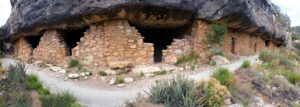
Fees:
- $15.00 per-person – valid for 7 days – This fee is charged per-person and is only valid for entry at Walnut Canyon National Monument for 7 days. Entrance for children 15 and under is free. Major credit cards are accepted for all fees.
- $45 – Flagstaff Area National Monuments Pass – Annual Pass for Walnut Canyon, Sunset Crater Volcano and Wupatki National Monuments. Admits pass holder and three adults (16 years and older) to Walnut Canyon National Monument for one year. Admits one vehicle at Sunset Crater Volcano, and Wupatki National Monuments for one year. The annual pass is good for 12 months from the month of purchase.
- America the Beautiful – National Parks and Federal Recreational Lands passes including the Annual Pass, Senior Pass and Access Pass. For more information on America the Beautiful passes, please click here.
North of Flagstaff
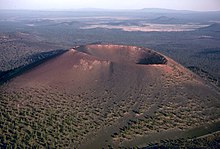 Sunset Crater Volcano National Monument – (20 miles, 30 minutes north of Flagstaff). 6082 Sunset Crater Road, Flagstaff. Sunset Crater is a cinder cone located north of Flagstaff in U.S. state of Arizona. The crater is within the Sunset Crater Volcano National Monument. Sunset Crater is the youngest in a string of volcanoes that is related to the nearby San Francisco Peaks. Most visitors drive through the 34 mile scenic loop that winds from Highway 89 through Sunset Crater Volcano and Wupatki National Monuments. The scenic loop leads you from the high Ponderosa Pine forests of Sunset Crater, down nearly 2,000 feet in elevation to the red rocks and painted desert vistas of Wupatki.
The following fees cover entrance to both Sunset Crater Volcano National Monument and Wupatki National Monument for seven days.
- $25.00 per passenger vehicle
- $20.00 per motorcycle
- $15.00 per cyclist or pedestrian
- Flagstaff Area National Monuments Annual Pass – $45 – Admits all occupants of the passholder’s vehicle to Sunset Crater Volcano, Wupatki, and Walnut Canyon National Monuments for one year from the month of sale.
- America the Beautiful – National Parks and Federal Recreational Lands passes including the Annual Pass, Senior Pass and Access Pass. For more information on America the Beautiful passes, please click here.
- Credit and debit cards are accepted for entrance fees and passes. The park does not process cash transactions. Credit and debit card transactions are more efficient and help save time and resources that can be allocated for other visitor services.
Grand Canyon National Park South Rim – (80 miles, 1 hour 20 minutes north of Flagstaff ). Around 5.5 million people each year see the 1 mile deep (1.6 km) Grand Canyon each year. The canyon is 277 river miles (446km) long, and up to 18 miles (29km) wide. Most visitors (90%) see Grand Canyon from the “South Rim” from 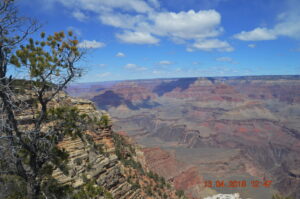 overlooks accessed by free park shuttle buses or by their personal vehicles. The South Rim is open all year. Open 24 hours/day.
The South Rim includes:
- Historic Grand Canyon Village, reached by driving and served by Grand Canyon Railwayfrom Williams, Arizona, 59 miles to the south.
- Scenic Hermit Road and Hermits Rest (7 miles/ 11.2 km) west of Grand Canyon Village
- Desert View Drive and Desert View (25 miles/ 41 km) east of Grand Canyon Village
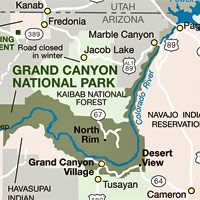 Admission to Grand Canyon National Park is for seven days and includes both the North Rim and South Rim.
No refunds are given due to inclement weather.
- Grand Canyon National Park Vehicle Permit – $35 (U.S. Dollars)
Admits one single, private, non-commercial vehicle and all its passengers, up to a 15 person passenger van. - Grand Canyon National Park Motorcycle Permit – $30 (U.S. Dollars)
Admits one single, private, non-commercial motorcycle and its passenger(s). - Grand Canyon National Park Individual Permit – $20/person (U.S. Dollars)
Admits one individual when entering by foot, bicycle, park shuttle bus, Grand Canyon Railway and private rafting trip. Individuals 15 years old and younger are admitted free of charge. - America the Beautiful – National Parks and Federal Recreational Lands passes including the Annual Pass, Senior Pass and Access Pass. For more information on America the Beautiful passes, please click here.
If you are hiking across the canyon, the South Kaibab Trail crosses the Colorado River on a narrow foot bridge 70 feet/ 21 m above the water. It is a 21 mile/ 34 km hike to go “Rim To Rim,” with a vertical descent – followed by a climb – of 1 mile/ 1.6 km. This is an overnight hiking trip for 95% of individuals, and most people really shouldn’t attempt it during the hot summer months, when high temperatures often average over 100 F. (38 C)
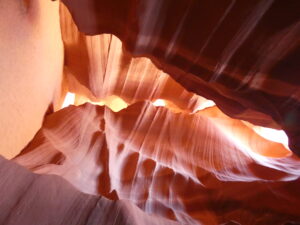 Antelope Canyon – (133 miles, 2 hours 15 minutes from Flagstaff north) Antelope Canyon is a slot canyon in the American Southwest, on Navajo land east of Page, Arizona. It includes two separate, scenic slot canyon sections, referred to as Upper Antelope Canyon, and Lower Antelope Canyon. Antelope Canyon lies on Navajo land and are only accessible via guided tour. Tour operators can be found at https://navajonationparks.org/guided-tour-operators/antelope-canyon-tour-operators/ Book early as the tours fill up quickly each day and there are usually only a 2-3 tours each day. Prices range from $60+ depending on length of tour and if you combine upper and lower canyons. Breathtaking photo opportunities!
To the Navajo, they call the Upper Antelope Canyon – Tsé’bighanilí – which means “The place where water runs through.” For Lower Antelope Canyon, they call this place Hazdistazí – which means “Spiral Rock Arches.”
The best times to visit:
- If you are looking to take photos of the sun beaming into the canyon, book a tour with the tour groups in Upper Antelope Canyon around 11am to 1pm for the months of March to October. To get extra time in the canyon, book a tour with a photography group – there may be an extra fee to book this type of tour.
- If you want to do a little hiking and want a little more seclusion, book a tour for the Lower Antelope Canyon area. This portion is not as busy as the Upper Antelope Canyon.
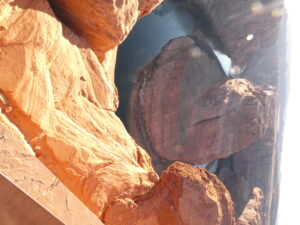 Horseshoe Bend – (103 miles, 2 hours from Flagstaff north) Horseshoe Bend is a near-perfect circular canyon carved into the Earth by the Colorado River located near the town of Page, Arizona, United States. It is also referred to as the “east rim of the Grand Canyon.” Its barrier-free rim allows visitors to walk straight up to the edge and gaze down at the crystal blue-green water below. It is accessible via hiking a 1.5-mile (2.4 km) round trip from a parking area just off U.S. Route 89 within southwestern Page. The overlook is 4,200 feet (1,300 m) above sea level, and the Colorado River is at 3,200 feet (980 m) above sea level, making it a 1,000-foot (300 m) drop. Visitors to the Horseshoe Bend Overlook will also be required to pay entrance fees determined by City of Page: Motorcycle: $5, Passenger vehicles (car, truck, SUV, RV, motorhome): $10. Large parking lot provided as well as restroom facilities. Short hike from parking lot to edge of rim.
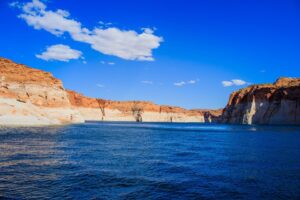
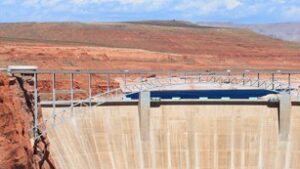
Glen Canyon National Recreation Area – (123 miles, 2 hours north from Flagstaff) Includes Glen Canyon Dam, Rainbow Bridge, and Lake Powell. Encompassing over 1.25 million acres, Glen Canyon National Recreation Area offers unparalleled opportunities for water-based & backcountry recreation. The recreation area stretches for hundreds of miles from Lees Ferry in Arizona to the Orange Cliffs of southern Utah, encompassing scenic vistas, geologic wonders, and a vast panorama of human history. Lies just outside Page, Arizona near Horseshoe Bend and Antelope Canyon. The Recreation Area is open 24 hours/day
 Fees:
Fees:
- 1-7 Day Vehicle Entrance – $30.00 – Admits one single, private, non-commercial vehicle and all its passengers
- 1-7 Day Motorcycle Entrance – $25.00 – Admits one single, private, non-commercial motorcycle and its riders.
- 1-7 Day Individual Entrance – $15.00 – Admits one individual when entering on foot or bicycle. Individuals 15 years of age and younger are admitted free.
- 1-7 Day Boating Entrance – $30.00 – Admits one single private vessel. If a Senior Pass is presented at time of purchase, the boat entrance fee is $15.00 and good for 1-7 Days.
- 1-7 Day Boating Entrance additional vessel – $30.00 – Admits one single private vessel on the same trailer as a vessel paying full entry fees
- Glen Canyon National Recreation Area Annual Pass – $55.00 – Allows unlimited entry to Glen Canyon for 12 months from date of purchase.
- Glen Canyon National Recreation Area Annual Vessel Sticker – $50.00 – Allows unlimited entry to Glen Canyon for one vessel for one calendar year. If a Senior Pass is presented at time of purchase, the annual vessel sticker fee is $25.
- America the Beautiful – National Parks and Federal Recreational Lands passes including the Annual Pass, Senior Pass and Access Pass. For more information on America the Beautiful passes, please click here.
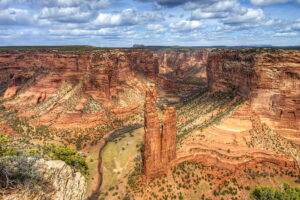 Canyon de Chelly National Monument – (171 miles, 2 hours, 45 minutes northeast of Flagstaff) The National Monument is located in the far northeast corner of Arizona near the New Mexico border, situated on Navajo tribal trust land. The monument encompasses approximately 84,000 acres of lands located entirely on the Navajo Nation with roughly 40 families residing within the park boundaries. The National Park Service and the Navajo Nation share resources and continue to work in partnership to manage this special place.There is no entrance fee for the park! The North and South Rim Drives, all ten overlooks and the White House Trail remain open all year to visit on your own. The roads are paved and accessible by vehicle (4-wheel drive is not required). The White House Trail starts from the White House Overlook on the South Rim. Open daily from 8 a.m. to 5 p.m.
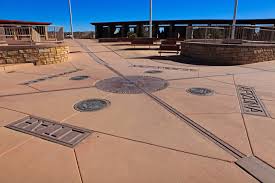 Four Corners Monument – (226 miles, 3 hours northeast from Flagstaff) 597 NM-597, Teec Nos Pos. The Four Corners Monument is the only place where four states meet, Arizona, New Mexico, Colorado and Utah. It rests on Navajo National Tribal Park land. Upon your arrival at the Four Corners there is a newly created vendor market, a place where you can purchase native artwork directly from the artisan. The monument is located in a rural area where there is no accommodations and services are limited. The closest market/gas station is located within 30 miles of the monument. While traveling here please plan accordingly, and make sure to have adequate attire and water, as there is no water or electricity at this particular park location. $10.00 per person March 1 to September 30
Four Corners Monument Hours of Operation
- Monday thru Friday: 8:00 am – 4:45 pm October 1 to March 31
- Monday thru Friday: 8:00 am – 5:50 pm April 1 to April 30
- Monday thru Friday: 8:00 am – 6:50 pm May 1 to May 23 (Thursday before Memorial Day)
- Monday thru Friday: 8:00 am – 7:50 pm May 24 to August 15
- Monday thru Friday: 8:00 am – 6:50 pm August 16 to September 30
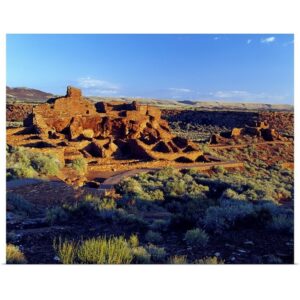
Wupatki National Monument – (30 miles, 35 minutes north of Flagstaff) 25137 N Wupatki Ln, Flagstaff. Open 9:00 to 5:00 pm. Wupatki National Monument, 30 miles north of Flagstaff in Arizona, contains many well preserved Anasazi and Sinagua ruins at the edge of the Painted Desert. Native American pueblo sites preserved pueblos once inhabited by ancestors of the Hopi and Zuni people, amid red rocks and prairies. Hiking, Interpretative Programs, Archaeology.
 Fees:
Fees:
- Private Vehicle – Sunset Crater-Wupatki Entrance Fee – $25.00 – This fee covers the occupants of one private vehicle for seven days at both Sunset Crater Volcano and Wupatki National Monuments.
- Bicyclist/Pedestrian – Sunset Crater-Wupatki Entrance Fee – $15.00 – This fee covers entry for one bicyclist or pedestrian for seven days at both Sunset Crater Volcano and Wupatki National Monuments.
- Motorcycle – Sunset Crater-Wupatki Entrance Fee – $20.00 This fee covers the occupants of one motorcycle for seven days at both Sunset Crater Volcano and Wupatki National Monuments.
- Flagstaff Annual Pass – $45.00 – This pass is valid for one year from the month of purchase. At Sunset Crater Volcano and Wupatki National Monuments, it covers entry for all occupants of one private vehicle. At Walnut Canyon National Monument, it covers entry for up to four adults; children ages 15 and younger enter for free.
- America the Beautiful – National Parks and Federal Recreational Lands passes including the Annual Pass, Senior Pass and Access Pass. For more information on America the Beautiful passes, please click here.