Completed STSM
Completed Short Term Scientific Missions (STSM)
-
- Grant Period January to December 2019
Michelle Balasso
The Short-Term Scientific Mission, supported by the International Society for Wood Science and Technology, took place at InnoRenew CoE, Slovenia. Michelle Balasso, PhD Candidate and Researcher at the ARC Training Centre for Forest Value, University of Tasmania visited the institution for two weeks, establishing a collaborative research on the theme of wood modification of Tasmanian native and planted timbers, creating a network with the researchers at InnoRenew CoE, and with the hosting institution; this set the grounds for a fruitful cooperation for the current and future scientific research.
During the mission, wood modification treatments were studied and applied on a range of native Tasmanian and planted timber species. Thermo-Hydro-Mechanical treatments (THM) were employed to densify two classes of products, and the effects of the treatments were thoughtfully evaluated with mechanical tests. During the time of the mission two independent projects were planned and carried out, and both will continue after the conclusion of the research visit.
THM Treatments were applied on fibre-grown Eucalyptus and Pinus species, as well as Tasmanian native Eucalyptus. The timber was densified to develop a thin layer to be used in Engineered Wood Products applications as hardwood floorings. Promising results were obtained, with a marked increase in the mechanical properties of all the species; density, stiffness, strength and hardness were all improved by the treatments, and stability of the material was evaluated with water absorption tests. Another project was developed with a focus on the moulding of different Eucalyptus species; different patterns were used, and the humidity intake of the densified material is under test over a several-months period.
The Short-Term Scientific Mission allowed for the researchers to get in close contact, develop a fruitful scientific and personal collaboration, which will stream in quality scientific publications. The wood technology area is continuously in expansion and growth, and the STSM was an extremely valuable experience to learn and develop knowledge on the wood modification and timber uses area. The work undertaken will be presented at the SWST Conference in 2020, Slovenia, in the effort to expose the research community to the research innovations, discoveries and impacts, as well as bringing to the community the experience of international collaboration in the spirit of the ethics of the STSM.
Andreja Pirc Barčić
Contribution and potential of wood industry and its products to the circular economy: Case examples from the US and Central-Southeast Europe
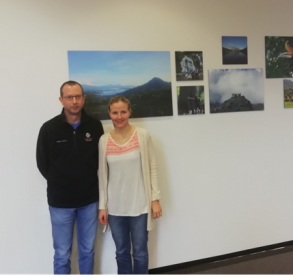
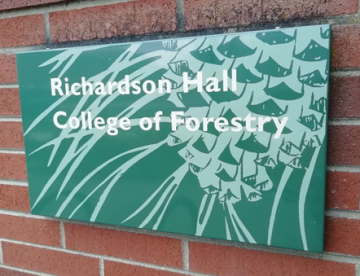
The institutions involved in the mission were Department of Wood Science & Engineering at College of Forestry at Oregon State University in Corvallis (OR, US) and Faculty of Forestry at University of Zagreb (Zagreb, Croatia). An assistant professor at the Faculty of Forestry University of Zagreb (Croatia), Andreja Pirc Barčić, visited professor Eric Hansen for two weeks, establishing collaborative research addressing components of the circular economies in the wood-based sector focusing on examples in the U.S. and Central-South-Eastern European countries. This collaborative research helped in creating and strengthening a network between the Faculty of Forestry University of Zagreb and College of Forestry at OSU. This set the ground for a fruitful cooperation for current and future scientific research. The purpose of this SWST STSMwas to present the contribution of the wood-based industry to the concepts of sharing and collaborative economies as components of the circular economy. Additionally, the aim of the SWST STSM was to strengthen existing and build new capacities for international partnership between Oregon State University, College of Forestry and Faculty of Forestry University of Zagreb. This aim was accomplished.
WORK CARRIED OUT DURING THE STSM
-
-
- Scientific papers, professional study documents, and policies, regarding the sharing and collaborative economies in the U.S. and Europe (economy in general, but also within the wood-based sector) were reviewed and summarized, all relative to sharing and collaborative models as aspects of the circular economy. A theoretical background of the circular economy & sharing economy was developed with an example of IKEA, one of the best-known examples of sharing economy in the wood-based sector. Also, documents and policies supporting sharing and collaborative principles related to the U.S. and European markets were examined.
- Based primarily on the work of Codagnone and Martens (2016), Botsman (2013), Botsman and Rogers (2010a); Botsman and Rogers (2010b); and Codagnone et al. (2016) examples of the sharing economy and/or collaborative economy related to the U.S. and Central-Southeastern European market were traced. Examples were categorized based on different business models – P2P (Peer-to-Peer); B2P (Business-to-Peer), P2B (Peer-to-Business); B2B (Business-to-Business).
- Further, data analysis about perceptions of the sharing and collaborative economies within the wood-based sector was conducted using data from a survey of the Slovenian wood-based sector stakeholders (data were collected before the SWST STSM).
- Connect with a number of faculty members within the Department as well as Dr. Meelis Teder from Estonia who was on a Fulbright scholarship to OSU. In addition, I taught in the graduate course “The Context of the Global Forest Sector” at the request of Dr. Scott Leavengood, Professor and Director of the Oregon Wood Innovation Center.
-
FUTURE COLLABORATIONS
The STSM gave me the opportunity to develop a fruitful scientific collaboration, which will result in publications, as well as in the future visits to College of Forestry, Oregon State University for further projects and scientific cooperation. One aspect of this cooperation that will be realized in the near future is a visit by Eric Hansen to the University of Zagreb Faculty of Forestry in December 2019.
More importantly, this STSM gave me an extremely valuable experience to extend my knowledge regarding the circular economy and sharing economy which will be used in the development of the actions needed for the cascade use of wood, wood products and utilization of wood following ‘circular’, ‘sharing’, and/or ‘caring’ principles in the Middle and Southeast Europe bio-based sector. Cascading use of wood is the smart way to use a natural resource – putting it to good use before it is reused, recycled and finally burnt for energy. It strongly overlaps with circular economy ideas. The work undertaken during this STSM will be presented at the SWST Conference in 2020, Slovenia, in the effort to expose the research community to the research innovations, discoveries and impacts, as well as bringing to the community the experience of an international collaboration in the spirit of the ethics of the STSM.
- Grant Period January to December 2020
Raphaela Hellmayr
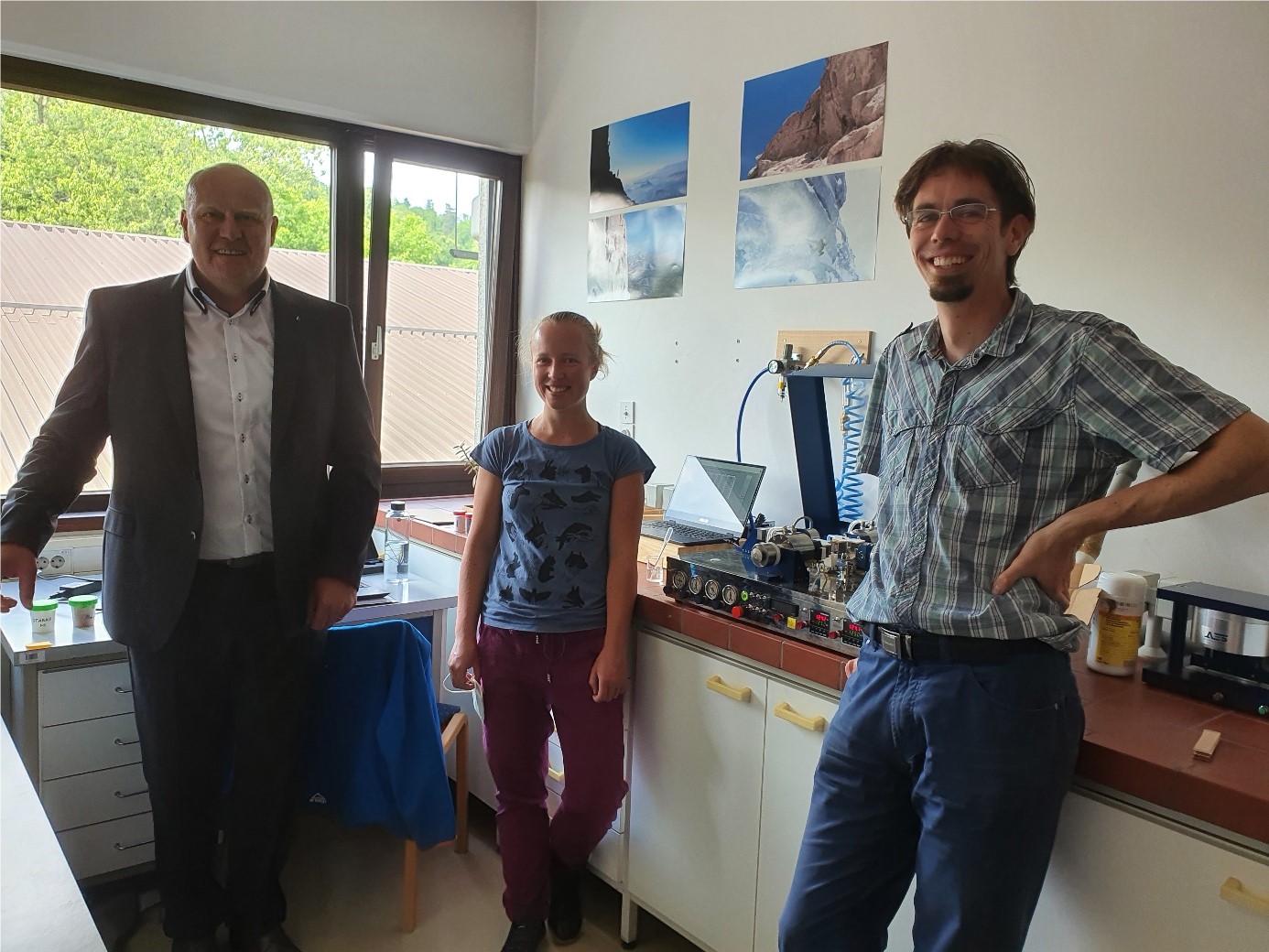
I am Raphaela Hellmayr, PhD student from Prof. Rupert Wimmer at BOKU, University of Natural Resources and Life Sciences in Vienna. My research topic is related to future engineered wood materials according to the cradle-to-cradle concept. Wood belongs to the biological cycle, but adhesives to the technical cycle, which means the closed loops are difficult to reach. I address the question how these wooden materials can become in line with the circular economy strategy with closed material loops. The main challenge is the adhesive, because as long as the bond line can’t be opened at the end of life, the wood particles will become smaller at each recycling step and adhesives accumulate.
I was very thankful for the collaboration with Prof. Milan Sernek from the University of Ljubljana, where I had the opportunity to work in his lab with ABES for two months during summer. Additionally other methods to characterize the adhesive, e.g., rheology, DSC or IR were applied, and I was very happy to use the available infrastructure in Ljubljana. It was a pleasure to get to know his research group and the university system in Slovenia.
The goal was to test the recycling potential, the pressing parameters, and the mechanical properties of a self-developed lignin starch-based adhesive with an automatic bonding evaluation system (ABES), where adhesives can be tested when gluing veneers. Promising results with comparable mechanical properties to urea formaldehyde could be reached and will be published in a scientific article later this year.
Thank you to Rupert and Milan for supervision during the STSM and special thanks to the Society of Wood Science and Technology for funding!
Andry Clarel Raobelina
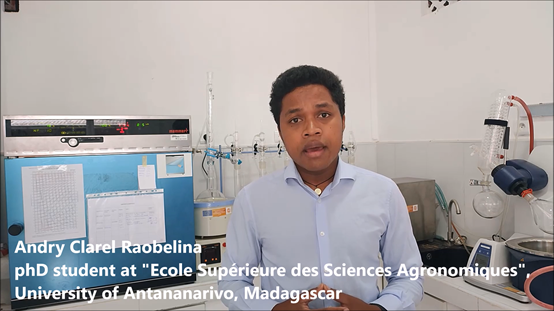
My name is Andry Clarel Raobelina, a Malagasy Phd student at «Ecole Supérieure des Sciences Agronomiques» (ESSA) of the University of Antananarivo. I get the 2020’s Short Term Scientific Mission award (STSM 2020), supported by Society for Wood Science and Technology (SWST). I spent seventeen days of scientific stay at INRAe -Champenoux (Nancy) from 14th to 20th December 2021. A research on wood density assessment of 38 species of Malagasy rosewood, palissander (Dalbergia spp) and 29 species of ebony (Diospyros spp) using X-ray CT scanning was carried out with the collaboration and under the supervision of some researchers from the “Biogéochimie des Ecosystèmes Forestiers” and “Silva” Team at INRAE. The research aimed to (i) evaluate if there is difference between wood density according to the wood part (sapwood and heartwood) and to (ii) understand how their density varies along the radial direction of the wood (pith to bark).
297 wood cores belonging to the two genera were transported from Madagascar to INRAE for the study. X-ray measurement were performed on the cores putted in polycarbonate box. The findings of the research contribute to enrich the wood properties database of Malagasy Dalbergia and Diospyros which are actually available for very few species in the literature. The knowledges about their density also help to better choose species or part of the wood according to their valorization. The stay at INRAe gave me the opportunity to learn wood density assessment using X-ray method CT scanning method. It also allowed me to develop fruitful collaboration with new researchers in the field of wood science.
Video:
https://drive.google.com/file/d/1hg8bPy_tt8u5zbblfI1eU9i6sEqQavCg/view?usp=sharing2
- Grant Period January to December 2022
Mustafa Zor
Dr Mustafa ZOR conducted his research titled “APPLICATION OF PREPARED ANIONIC AND CATIONIC CHEMICALS ON WOOD AND INVESTIGATION OF TRIBOELECTRIC BEHAVIOR PROPERTIES” between 09-20 May 2022 in BCMaterials, Spain. Within the scope of the research, functional wood energy devices were obtained with specially synthesized anionic and cationic compounds on wood coatings, which are biomaterials.
I would like to thank the SWST for their contribution.
Filip Majstorović
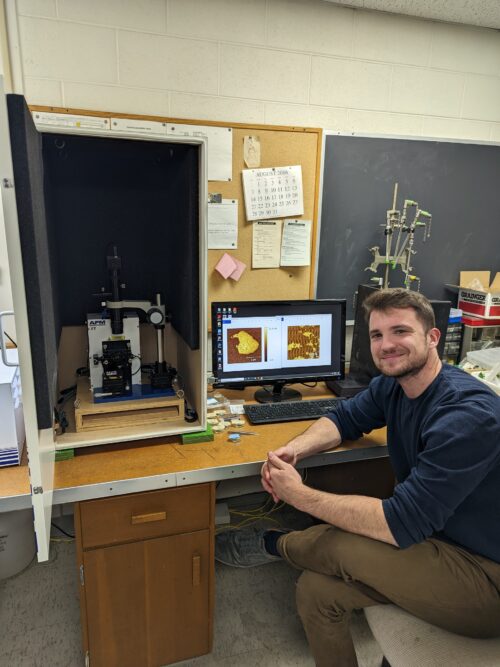
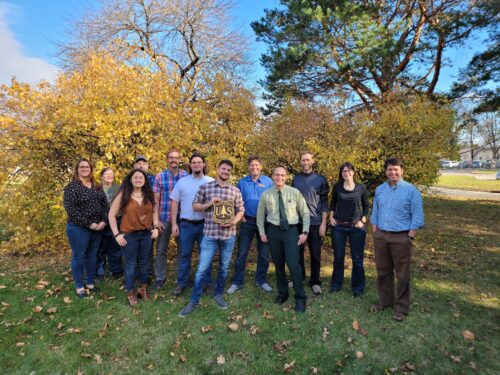
Visit to USDA FS Forest Products Laboratory, Madison, Wisconsin, November 2022.
As a part of my short-term scientific mission, I got familiar with new techniques I would like to utilize in my future research. With the assistance of Carlos Baez, I learned how atomic force microscopy could be used to experimentally probe the topography of materials, ranging from cellulose nanofibers to wood. This experience was advantageous in understanding the strengths and weaknesses of this particular method when compared to other commonly applied microscopy techniques. Dr Nayomi Plaza showed me how she uses light scattering to characterize film-based materials. Besides performing experiments, I also learned fundamental data analysis and interpretation principles. The coding-based approach to research using Python was exciting, as I am currently learning to utilize coding to assist my work.
The most significant success of this short-term scientific mission is the collaboration I established with researchers at FPL. As a wood scientist interested in a better understanding the wood structure and its fundamental properties, there is no better place to visit than FPL. Because of our joint research interests, we established current and potential future collaboration topics. We are currently collaborating on a research project related to my doctoral studies. It is foreseen that this should result in two individual publications (2023). We also discussed research topics to pursue afterwards, hopefully resulting in more scientific publications and conference presentations.
Lastly, other than the enjoyable work environment I experienced at FPL, I appreciated the time spent outside work with my new colleagues. Being acquainted with good food, live music, and beautiful nature in Madison made this STSM beneficial for my career and a fun experience I will cherish forever. I am particularly grateful to Chris Hunt for hosting me in his house for Halloween and introducing me to the marshmallow culture.
Fatemeh Rezaei
Research objective:
The goal of this project is to determine the contribution of thickness variability in CLT lamstock to bond formation process and the resulting bond integrity in CLT layups. The specific objective is to determine the effect of thickness variations in adjacent laminations on pressure transfer and adhesive bond formation between layers.
Research outcome:
1) The results were used as a proof-of concept in a research proposal accepted for funding by
ARS/Tall Wood Design Institute, May 15th, 2023. L. Muszynski, J. Nairn, F. Rezaei (2023): Understanding the effect of lamination thickness variations on bond integrity and panel properties in CLT. USDA ARS/CoF TallWood Design Institute program.
(Requested: $189,000/24 months, funded: $165,375/36 months).
2) The preliminary results will be presented in ICEM20 conference on July 2-7, 2023, Porto,
Portugal, the National Laboratory of Civil Engineering and the Portuguese Society for
Experimental Mechanics. Muszynski L., F. Rezaei, J. Nairn (2023): Understanding the Effect of Lamella Thickness Variations on Local Bonding Pressure Distribution in CLT Layups. 20th International Conference on Experimental Mechanics (ICEM20). Applications in Materials Science, Engineering and Biomechanics. July 2-7, 2023, Porto, Portugal (oral presentation).
3) Testing Procedure is successfully developed and can be applied for further research analysis.
Acknowledgment
“My special thank goes to Prof. Lech Muszynski, for his effort, patient and smartness put into the research, a great professor, also for his wonderful lessons, explanations, and interpretation”.
“I also want to thank SWST, for their great assistance, to give me this opportunity to study abroad”.
- Grant Period January to December 2023
Nežka Sajinčič
As an Assistant Researcher at InnoRenew CoE and a PhD student at the Faculty of Education, University of Primorska, Slovenia, I had the wonderful opportunity to go on a STSM for a week in April 2023 to the College of Forestry, Oregon State University, Corvallis, Oregon, USA. My main research interest lies in the transfer of scientific knowledge in the field of wood science. During my stay, I conducted an experiment to explore ways of making learning videos on wood as a building material more engaging and effective. Specifically, students at OSU were invited to participate in an experiment exploring the impact different types of background music have on knowledge retention, engagement, and cognitive load. The STSM experience also allowed me to immerse myself in a different culture and interact with enthusiastic researchers at various stages of their careers. As a young researcher, this was an incredible opportunity for which I am extremely grateful.